Can aerothermal produce domestic hot water?
Yes. Many aerothermal systems are designed to produce DHW alongside heating and cooling, integrating both functions in a single installation.
Schedule temporarily closed
We are not accepting new jobs or quote requests at the moment.
If you already have work in progress with +QUECLIMA, you can contact us through the usual channels.
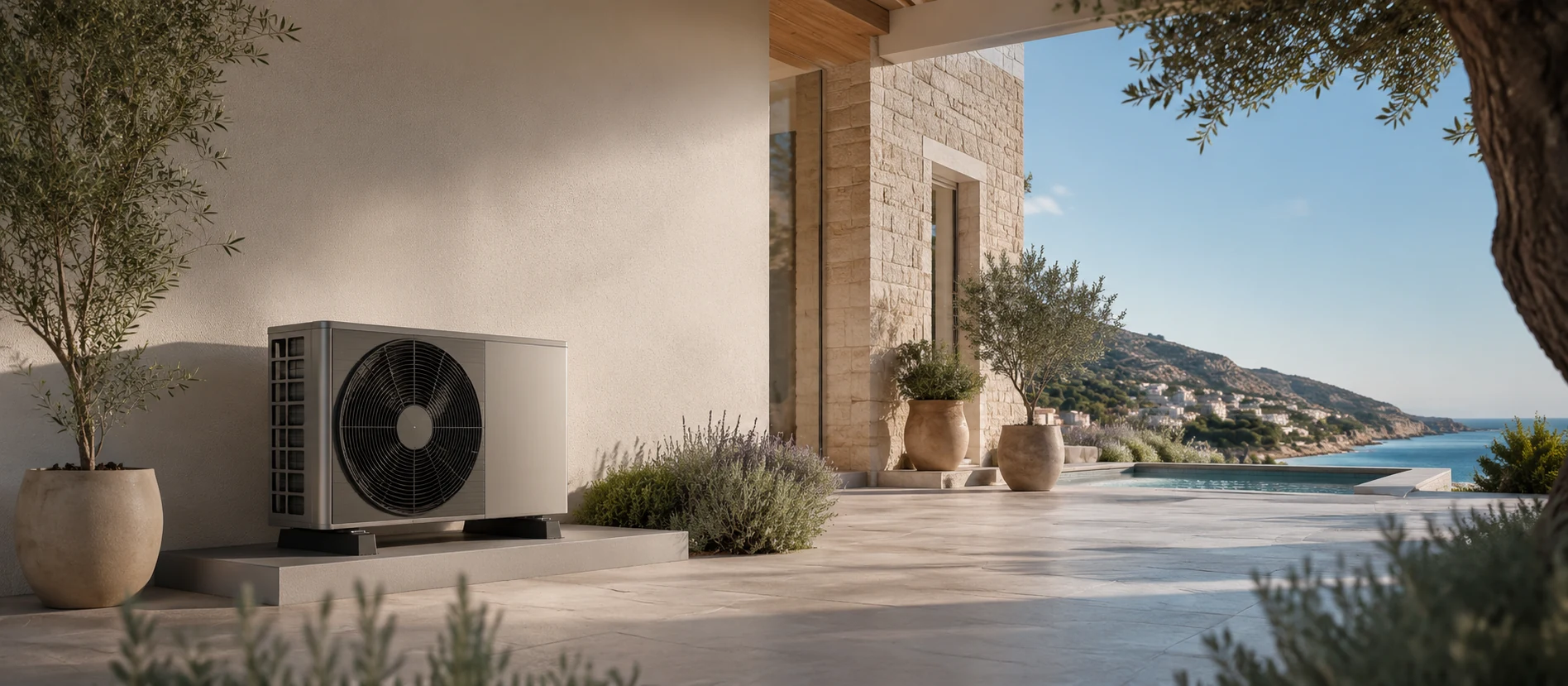
An honest guide to help you decide whether aerothermal is the right choice for your home on the Costa Blanca.
Guide
Aerothermal heat pumps are attracting a lot of interest — and for good reason. But they also raise many questions: does it replace air conditioning? Do I need underfloor heating? Is it worth it on the Costa Blanca? This guide answers those questions honestly, without exaggerated promises and with the real conditions of this region in mind.
An aerothermal heat pump extracts energy from the outside air to heat or cool a home, and in many cases also to produce domestic hot water (DHW). It does not generate heat — it moves it. That is what makes it efficient: for each kWh of electricity consumed, it can deliver between 2.5 and 4 kWh of thermal energy, depending on conditions.
It works on the same principle as the reverse cycle of a standard air conditioner. In winter it captures heat from outdoor air even when it is cold; in summer it can reverse the cycle to cool. If configured for it, it also heats a hot water tank, potentially replacing a gas boiler or electric heater.
The Mediterranean climate of the Costa Blanca is one of the most favourable for heat pumps. Cold temperatures reduce the efficiency of these systems; here, winters are short and mild, with few frosty nights in coastal areas like Benidorm, Altea or Calpe.
It makes particular sense when the home needs climate control both in summer and winter, when you want to integrate DHW production into the same system, and when low-temperature emitters (underfloor heating or fan-coils) are installed or planned. Also in primary residences used year-round, where long-term energy independence is a priority.
Not every home benefits equally from aerothermal. These are the main factors:
Installation costs are significantly higher than a split or multi-split system. The decision should be based on a genuine assessment of the property, not just general trends.
Aerothermal is not the answer for every situation. A split inverter or multi-split system may be more practical when:
There is no single right answer. What makes sense depends on the specific property, actual usage and the owner's priorities.
Before recommending any system, a technician should assess the real energy demand of the property — not just the floor area. Orientation, insulation condition, existing or planned emitters, available outdoor space and usage profile all determine whether aerothermal is the right solution and, if so, with what configuration.
A quote without this prior analysis may result in an oversized, undersized or simply unsuitable installation. The site visit is not a formality; it is the foundation of a correct proposal.
Common questions
Yes. Many aerothermal systems are designed to produce DHW alongside heating and cooling, integrating both functions in a single installation.
Yes. The mild climate of this area, with few very cold nights, keeps the system working efficiently throughout winter. It is one of the best regions in Spain for annual heat pump performance.
Yes — with fan-coils or adapted low-temperature radiators. Efficiency is slightly lower than with underfloor heating, but it can still be a valid solution.
It depends on the property, usage and DHW needs. For short-season holiday use or limited budgets, a split system may be more appropriate.
The aerothermal outdoor unit is usually larger than a split unit. It requires a well-ventilated outdoor space, free of obstructions and complying with community and local authority rules.
Customers who already trust us
Real reviews from customers who trusted +QUECLIMA to install, repair or maintain their air conditioning.
Tanto Dani como Fabián han hecho un trabajo excelente. Muy profesionales, limpios y puntuales. Me subieron el aparato exterior y me dejaron la instalación perfecta. ¡Los recomiendo sin duda alguna!
Muy contento con el servicio de Más que Clima en Benidorm. Instalación rápida, profesionales atentos y todo funcionando perfecto desde el primer día. Sin duda los recomiendo si necesitas un aire acondicionado.
Muy profesionales, te aconsejan con las mejores marcas y la instalación muy rápida. Ya van varias veces que he trabajado con ellos y son un 10. 100% recomendables sin duda.
Muy profesionales, muy humanos. Estoy contentísima con los dos aires que me han colocado. Siempre están a disposición del cliente. Les estoy súper agradecida.
Todo perfecto! Rápido, limpio y muy profesional. Yuri y Mario, Bar El Papagayo Benidorm.
Han instalado mi aire acondicionado en Dénia y encantada. Muy buenos profesionales, rápidos y todo limpio y recogido. Repetiría sin dudar!
Azienda che lavora molto bene, puntuale, precisa e molto competente. I ragazzi sono gentili e professionali, li raccomando a coloro che necessitano di un loro intervento.
Excelente equipo, excelente trabajo!!! Dos veces me han hecho las cosas perfectamente! Gracias.
Todo muy bien, me ha puesto el aire rápido y eficaz, me ha salvado del infierno del verano 🫠🫠
Excellent service—fast, efficient, and highly knowledgeable. A professional and friendly team. Highly recommend.
Teníamos un problema con nuestro aire acondicionado. Dani ha llegado rápido y ha solucionado perfecto. Precio/calidad 100%. Ya le hemos recomendado a nuestros vecinos.
Pedí presupuesto para cambiar el termo. Lo instalaron al día siguiente. Económico y muy rápido. Contento con su trabajo.
We are not accepting new jobs or quote requests at the moment.