How much capacity do I need for 25 m²?
As a rough guide, between 2,000 and 3,000 kcal/h — but it depends on orientation, insulation and use. It is not an exact figure without knowing the actual property.
Schedule temporarily closed
We are not accepting new jobs or quote requests at the moment.
If you already have work in progress with +QUECLIMA, you can contact us through the usual channels.
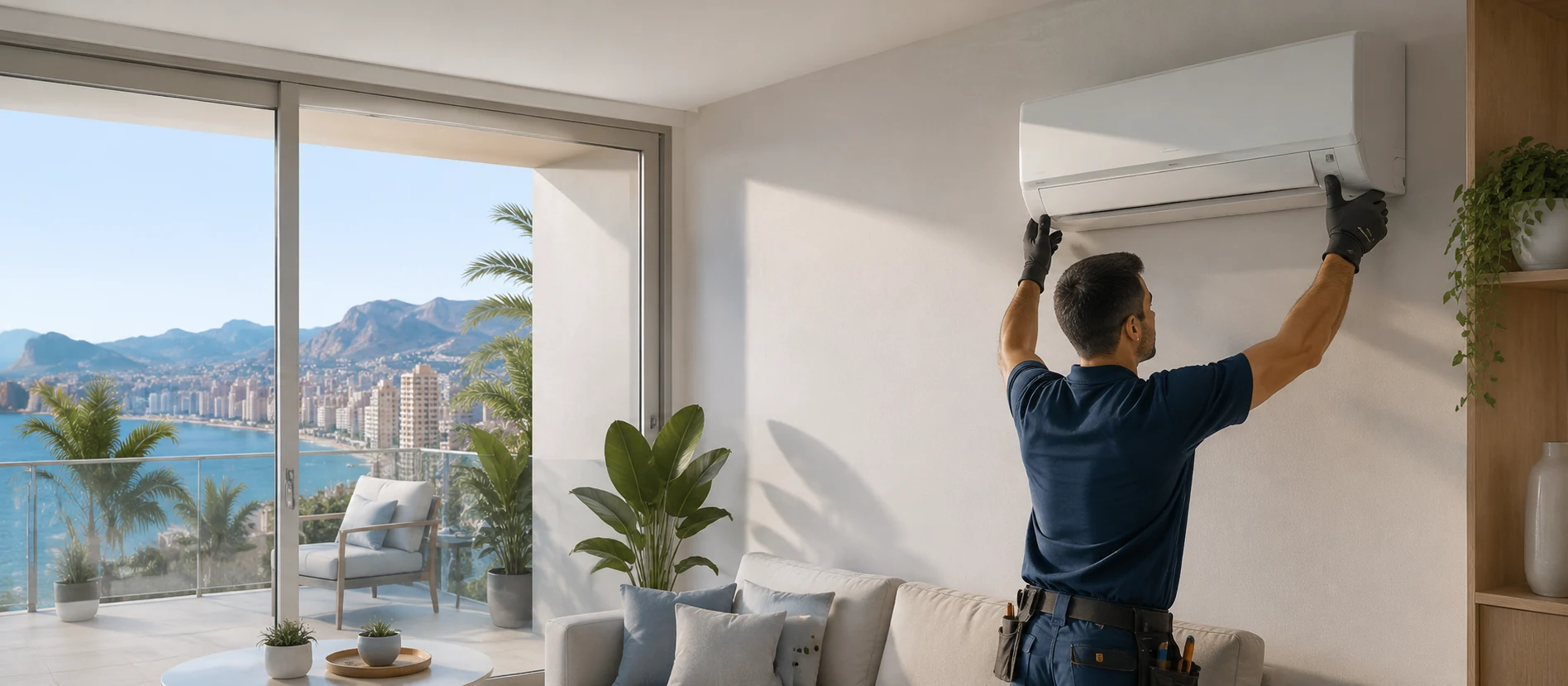
Floor area is just the starting point. Here are the factors that really determine the capacity you need.
Guide
The most common starting point is the wrong one: “I have X square metres — what capacity do I need?” Floor area matters, but it does not tell the whole story. Two homes of the same size in the same building can need very different systems depending on orientation, insulation and how the space is used.
Getting the capacity wrong has real consequences. An undersized unit will never reach the desired temperature on the hottest days: it runs continuously without achieving comfort. An oversized unit cools quickly and stops, with frequent start-stop cycles that are less efficient and put more strain on the compressor. It also fails to properly dehumidify the air, leaving a cool but clammy feeling.
The right capacity is the one that balances comfort, efficiency and longevity.
A proper capacity calculation considers several elements:
As a general reference, residential spaces typically require between 100 and 130 W per square metre. Well-insulated homes with favourable orientation may need less; top-floor flats facing south with large windows or older buildings may need more.
An online calculator can give a useful starting estimate. It should never be used as the only basis for purchasing a unit — real property characteristics are essential for accurate sizing.
A bigger unit is not always better. An oversized system cools rapidly then stops before completing its dehumidification cycle. The result can be a low temperature with high humidity — uncomfortable. The compressor also suffers more from frequent on-off cycles, reducing its working life.
The system type also affects the approach to sizing:
Before choosing a unit, the most practical step is to have a technician visit the property. In 20–30 minutes they can assess orientation, insulation, layout and intended use. With that information, sizing has a real basis and the quote is more accurate and reliable.
Avoid surprises after installation: a poorly sized unit is a mistake that stays with you for the life of the product.
Common questions
As a rough guide, between 2,000 and 3,000 kcal/h — but it depends on orientation, insulation and use. It is not an exact figure without knowing the actual property.
No. Oversizing causes short cycling, lower energy efficiency and poor dehumidification. The goal is correct sizing based on the real property.
Yes. They modulate output to match actual demand, reducing consumption and on-off cycling compared to fixed-speed units.
It depends on size, layout and whether rooms are used simultaneously. Sometimes a multi-split covers everything; other times independent units per room work better.
Possible causes include dirty filters, refrigerant loss or an installation issue. A technical inspection will identify the problem.
Customers who already trust us
Real reviews from customers who trusted +QUECLIMA to install, repair or maintain their air conditioning.
Tanto Dani como Fabián han hecho un trabajo excelente. Muy profesionales, limpios y puntuales. Me subieron el aparato exterior y me dejaron la instalación perfecta. ¡Los recomiendo sin duda alguna!
Muy contento con el servicio de Más que Clima en Benidorm. Instalación rápida, profesionales atentos y todo funcionando perfecto desde el primer día. Sin duda los recomiendo si necesitas un aire acondicionado.
Muy profesionales, te aconsejan con las mejores marcas y la instalación muy rápida. Ya van varias veces que he trabajado con ellos y son un 10. 100% recomendables sin duda.
Muy profesionales, muy humanos. Estoy contentísima con los dos aires que me han colocado. Siempre están a disposición del cliente. Les estoy súper agradecida.
Todo perfecto! Rápido, limpio y muy profesional. Yuri y Mario, Bar El Papagayo Benidorm.
Han instalado mi aire acondicionado en Dénia y encantada. Muy buenos profesionales, rápidos y todo limpio y recogido. Repetiría sin dudar!
Azienda che lavora molto bene, puntuale, precisa e molto competente. I ragazzi sono gentili e professionali, li raccomando a coloro che necessitano di un loro intervento.
Excelente equipo, excelente trabajo!!! Dos veces me han hecho las cosas perfectamente! Gracias.
Todo muy bien, me ha puesto el aire rápido y eficaz, me ha salvado del infierno del verano 🫠🫠
Excellent service—fast, efficient, and highly knowledgeable. A professional and friendly team. Highly recommend.
Teníamos un problema con nuestro aire acondicionado. Dani ha llegado rápido y ha solucionado perfecto. Precio/calidad 100%. Ya le hemos recomendado a nuestros vecinos.
Pedí presupuesto para cambiar el termo. Lo instalaron al día siguiente. Económico y muy rápido. Contento con su trabajo.
We are not accepting new jobs or quote requests at the moment.