How often should I clean the filters?
In normal use, once or twice a year. In dusty environments or homes with pets, more frequently.
Schedule temporarily closed
We are not accepting new jobs or quote requests at the moment.
If you already have work in progress with +QUECLIMA, you can contact us through the usual channels.
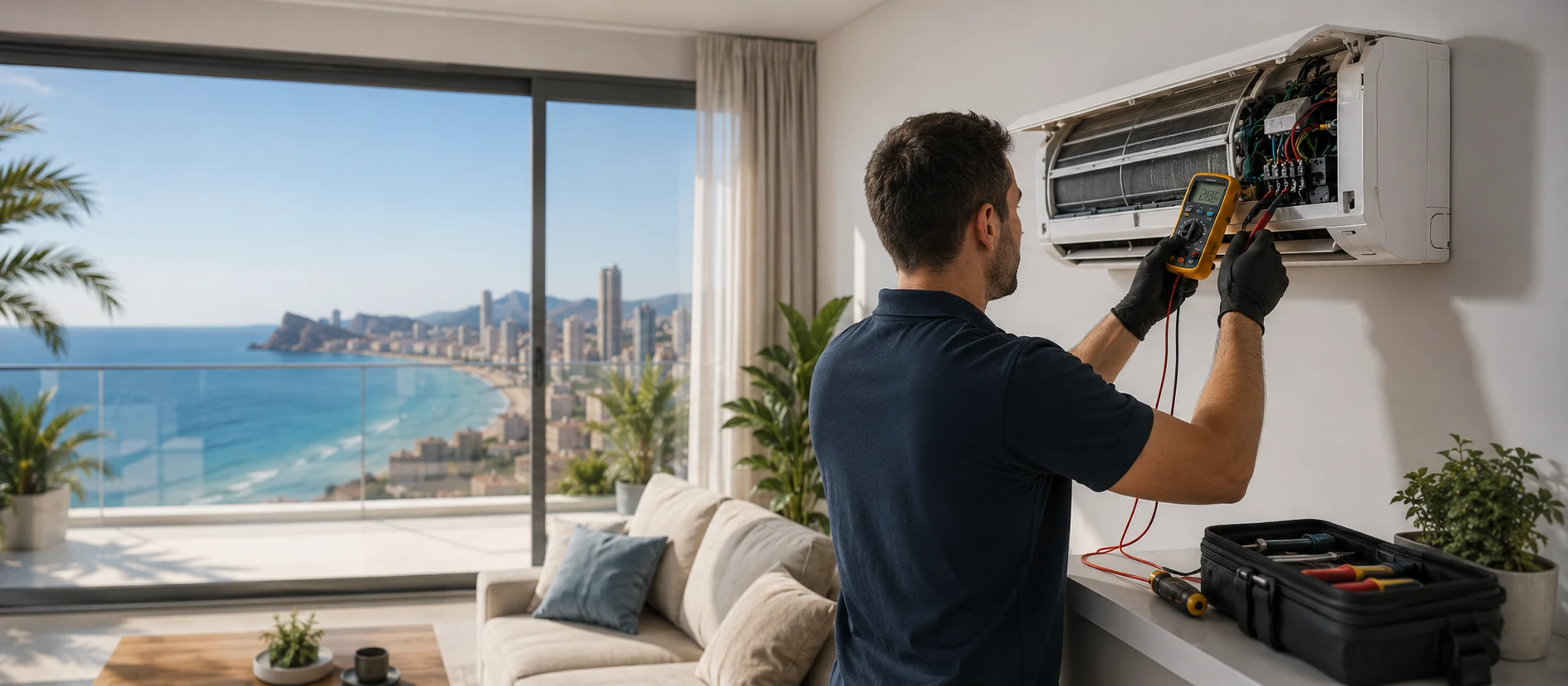
Checking your unit in spring avoids problems at the worst time: when it is hottest and hardest to get a technician quickly.
Guide
Air conditioning units sit idle or barely used through winter. When the heat arrives, demand surges. A unit that has not been checked may start the season with a clogged filter, a blocked drain or reduced performance. Checking in April or May is a practical decision that saves problems and waiting time.
The indoor unit's filter catches dust, pet hair and airborne particles. A dirty filter reduces airflow, lowers efficiency and can circulate odours and contaminants into the room.
Filter cleaning is the simplest maintenance task any user can do: with the unit off and unplugged, remove the filter from the front panel, shake or vacuum off the dust, and wash it with lukewarm water if it is washable. Make sure it is completely dry before replacing it.
Important: users should only handle the filter accessible from the front panel. Do not open the indoor unit casing or touch any electrical components or refrigerant circuit parts.
The indoor unit generates water as it cools the air. This water collects in a tray and drains out through a pipe. If that pipe is blocked — by dirt, algae or insects — water accumulates and can overflow, dripping down the wall or ceiling.
Before summer, check that the drain is clear. Damp patches, limescale deposits or small puddles below the indoor unit are signs that the drain needs attention.
The outdoor unit expels heat to the outside. If it is partly blocked by vegetation or has dirty coil fins, it cannot work properly and efficiency drops.
There are signs users can spot before a unit fails or underperforms:
Any of these signs justifies a technical check before the hot weather sets in.
In holiday rental properties, maintenance is not optional: thermal comfort is one of the first things guests notice and review. A unit that fails in August can generate negative reviews and complaints. A pre-season check is a clear investment.
In residential communities or commercial premises with several units, an annual coordinated review allows problems to be caught before they escalate, and replacements to be planned without urgency.
Users can: clean the front-panel filter, check that the outdoor unit is clear and unobstructed, and verify that the remote control and programmes work correctly.
Call a technician when: water is dripping from the indoor unit, the unit makes unusual noises, it is not cooling or heating adequately, frost appears on the indoor unit, an error code is displayed, or no service has been carried out in more than two years.
Common questions
In normal use, once or twice a year. In dusty environments or homes with pets, more frequently.
If the filter is washable (most are), yes. Make sure it is completely dry before replacing it — a damp filter can cause odours and damage the evaporator.
It may be the evaporator or the condensate tray. If the smell persists after a few minutes of running, it is advisable to have a technician inspect the unit.
A correctly installed unit with no leaks does not need periodic refills. If it is losing refrigerant, there is a leak that needs to be found and repaired, not just topped up.
Not necessarily, especially if you use it for heating. If it sits unused for months, keep it clean and make sure the outdoor unit does not accumulate leaves or debris.
Customers who already trust us
Real reviews from customers who trusted +QUECLIMA to install, repair or maintain their air conditioning.
Tanto Dani como Fabián han hecho un trabajo excelente. Muy profesionales, limpios y puntuales. Me subieron el aparato exterior y me dejaron la instalación perfecta. ¡Los recomiendo sin duda alguna!
Muy contento con el servicio de Más que Clima en Benidorm. Instalación rápida, profesionales atentos y todo funcionando perfecto desde el primer día. Sin duda los recomiendo si necesitas un aire acondicionado.
Muy profesionales, te aconsejan con las mejores marcas y la instalación muy rápida. Ya van varias veces que he trabajado con ellos y son un 10. 100% recomendables sin duda.
Muy profesionales, muy humanos. Estoy contentísima con los dos aires que me han colocado. Siempre están a disposición del cliente. Les estoy súper agradecida.
Todo perfecto! Rápido, limpio y muy profesional. Yuri y Mario, Bar El Papagayo Benidorm.
Han instalado mi aire acondicionado en Dénia y encantada. Muy buenos profesionales, rápidos y todo limpio y recogido. Repetiría sin dudar!
Azienda che lavora molto bene, puntuale, precisa e molto competente. I ragazzi sono gentili e professionali, li raccomando a coloro che necessitano di un loro intervento.
Excelente equipo, excelente trabajo!!! Dos veces me han hecho las cosas perfectamente! Gracias.
Todo muy bien, me ha puesto el aire rápido y eficaz, me ha salvado del infierno del verano 🫠🫠
Excellent service—fast, efficient, and highly knowledgeable. A professional and friendly team. Highly recommend.
Teníamos un problema con nuestro aire acondicionado. Dani ha llegado rápido y ha solucionado perfecto. Precio/calidad 100%. Ya le hemos recomendado a nuestros vecinos.
Pedí presupuesto para cambiar el termo. Lo instalaron al día siguiente. Económico y muy rápido. Contento con su trabajo.
We are not accepting new jobs or quote requests at the moment.